Drop D Bass Tuning: Your Easy Step-by-Step Guide with an Online Bass Tuner
Unleash new sonic possibilities with Drop D tuning! As a bassist, I've always loved how a simple tweak can completely transform a song's feel. If you're looking to add weight, power, and a darker mood to your playing, you've come to the right place. This guide will walk you through transforming your bass's sound, explaining what Drop D is, why bassists love it for heavier genres, and how to achieve it perfectly using a drop d bass tuner. Wondering how do you tune a bass guitar to get that massive, growling tone you hear in your favorite rock and metal tracks? Get ready to dive into a deeper, more resonant world with our online bass tuner.
What is Drop D Bass Tuning and Why Use It?
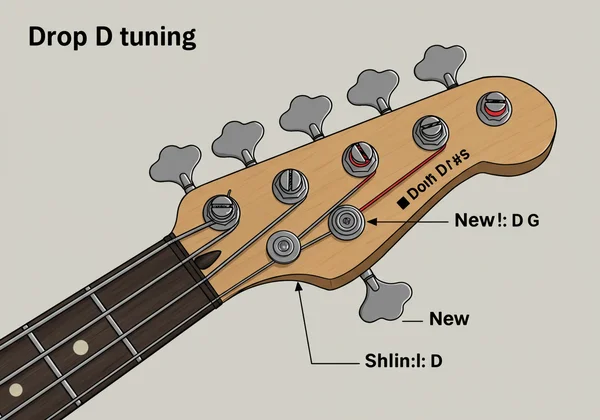
Before we start turning any pegs, let's break down what Drop D tuning is and why it’s such a popular alternate bass tuning among players across various genres. In simple terms, Drop D tuning involves changing only one string from the standard E-A-D-G tuning. You lower your thickest, lowest string (the E string) by one whole step down to a D. The other three strings—A, D, and G—remain exactly the same. The result is a new tuning pattern: D-A-D-G.
This small change has a massive impact on your bass's sound and playability. It extends your instrument's lower range, giving you access to three powerful, rumbling notes (D, D#, and E) that were previously out of reach. This is the secret behind the heavy, ground-shaking riffs you hear in countless iconic songs.
Understanding the D-A-D-G Notes
Moving away from standard tuning can feel intimidating at first, but Drop D is incredibly intuitive. Your lowest string is now a D, an octave below the D on your third string. This creates a powerful harmonic relationship. You can now play power chords (root and fifth) on the bottom two strings by simply barring one finger across them at the same fret. This technique makes playing fast, aggressive riffs much more efficient and is a cornerstone of the Drop D sound. The new note layout becomes D (lowest), A, D, and G (highest).
Musical Impact & Popular Genres
The sonic character of Drop D is deep, resonant, and often described as "heavy." This is why it has become a staple in rock and metal music. Bands like Tool, Soundgarden, and Rage Against the Machine have used Drop D to create some of the most memorable bass lines in modern music. The lowered tension on the bottom string gives it a slightly looser feel and a darker timbre, which is perfect for genres that demand a powerful low end. But it's not just for heavy music; players in alternative, blues, and even folk use it to add depth and a different flavor to their sound.
Benefits of Exploring Alternate Bass Tuning
Learning Drop D is your gateway to the broader world of alternate tunings. It teaches you how changing just one note can open up entirely new creative avenues. You start to think about fretboard patterns and note relationships differently. Experimenting with a heavier sound can inspire new riffs and bass lines you might never have discovered in standard tuning. It's a fantastic way to break out of a creative rut and expand your musical vocabulary, all without needing any special equipment—just a reliable bass tuner.
How to Tune Your Bass to Drop D Accurately
Now for the fun part: actually tuning your bass. The key to a great-sounding Drop D is accuracy. A note that's even slightly off can make your entire instrument sound muddy and out of sync. This section will guide you through how to tune bass to drop d flawlessly. Follow these steps carefully, and you’ll be shaking the walls in no time. For this process, a precise and responsive tuner is non-negotiable, which is why I always recommend a good online bass guitar tuner for quick and easy access.
Before You Begin: Prepping Your Bass
A successful retuning starts with a well-prepared instrument. First, make sure your bass strings are in good condition. Old, grimy strings won't hold their tuning well and can sound dull, especially when de-tuned. If your strings are more than a few months old and you play regularly, consider changing them. Also, play each string in standard tuning once to ensure everything is settled. This gives you a stable starting point and helps you hear the change more clearly as you tune down.
Using an Online Bass Tuner for Drop D (D-A-D-G)
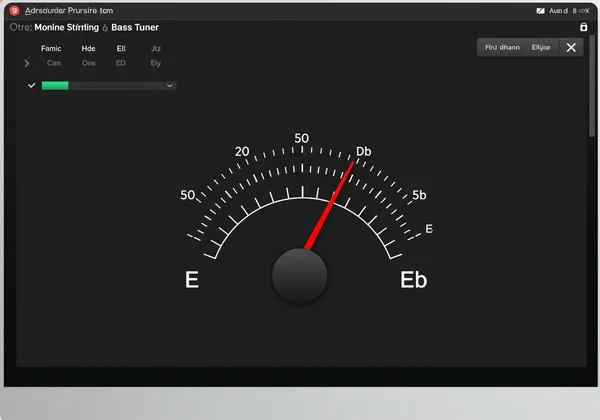
While clip-on tuners and pedals are great, nothing beats the convenience of a high-quality online bass guitar tuner that's ready whenever you are. Our free online bass tuner is perfect for this task. It uses your device’s microphone to give you real-time, accurate feedback.
Here's how to use it for Drop D:
- Navigate to the free online tool.
- Allow microphone access when prompted.
- Click "START" to activate the tuner.
- Select the "E" string on the virtual headstock. This is the string we'll be changing.
The visual interface with both a dial and a headstock makes it incredibly easy for beginners and pros alike to see exactly how sharp or flat their note is.
Step-by-Step: Tuning the E-String to D
This is the most critical step. Your goal is to lower the pitch of the low E string by two semitones (one whole step) to D.
- Pluck your open E string firmly and let it ring out.
- Watch the tuner. It will initially show that you are on the note "E."
- Slowly and carefully turn the tuning peg for the E string to loosen it. You should hear the pitch begin to drop.
- Continue turning the peg while plucking the string intermittently. The tuner needle will move from E, past Eb (or D#), until it approaches D.
- Fine-tune the peg with small adjustments until the tuner’s needle is perfectly centered on "D" and the indicator turns green. Take your time here; overshooting and having to tune back up can affect string stability.
Verifying All Strings: A, D, and G
After you've successfully tuned your low string to D, don't stop there! Changing the tension on one string can slightly affect the others. Pluck each of the remaining strings—A, D, and G—one by one. Use the tuner to verify they are still perfectly in tune. Make any minor adjustments to their tuning pegs as needed. Once all four strings read D, A, D, and G on the tuner, you're officially in Drop D. Play a few notes and enjoy that deep, satisfying growl!
Pro Tips for Maintaining Drop D Tuning
Getting into Drop D is one thing; staying there and making it sound great is another. Once you have the D-A-D-G notes locked in, there are a few things to keep in mind to get the most out of this powerful tuning. As someone who spends a lot of time in lower tunings, I've picked up a few tricks to handle the common quirks that come with it.
Common Issues and How to Address Them
The most common issue players face in Drop D is fret buzz. Because you've lowered the tension on your thickest string, it will vibrate more widely and may rattle against the frets, especially if you have a low action.
Here are a few fixes:
-
Adjust Your Playing Style: Pluck the string a little more gently or move your plucking hand closer to the bridge. A lighter touch can often eliminate buzz without any gear adjustments.
-
Use Thicker Strings: If you plan to stay in Drop D often, consider using a slightly heavier gauge string set. A thicker low string will have more tension when tuned to D, reducing flop and buzz.
-
A Professional Setup: If buzz persists, a slight truss rod or bridge saddle adjustment from a professional guitar tech can work wonders. Don't be afraid to seek expert help for a perfect setup.
Famous Songs & Artists Using Drop D Bass
Need some inspiration for what to play in Drop D? You've got a massive library of amazing music at your fingertips. This tuning is perfect for a standard four-string bass and has been used by some of the most innovative bassists in history.
- "Schism" by Tool: Justin Chancellor’s iconic, intricate bass line is a masterclass in Drop D creativity.
- "Black Hole Sun" by Soundgarden: Ben Shepherd’s melodic and heavy playing drives this grunge anthem.
- "Killing in the Name" by Rage Against the Machine: Tim Commerford’s aggressive, driving riff is pure Drop D power.
Listening to how these artists use the tuning can give you great ideas for your own riffs. You can easily check your tuning before tackling these classics to make sure you sound just right.

The Final Note
Ready to push the boundaries of your bass playing? Drop D tuning opens up a world of heavier, richer tones that can inspire countless new riffs and songs. It’s an essential tool for any bassist interested in rock, metal, or simply exploring new creative territory. With your newfound knowledge and a reliable bass tuner, you're perfectly equipped to explore this exciting alternate tuning. Don't let uncertainty about tuning hold you back. The process is simple, the payoff is huge, and using a tool like our precise online bass tuner makes it effortless. Start experimenting today and discover the powerful sound of Drop D!
Your Questions Answered
What are the specific notes for Drop D bass tuning?
The notes for Drop D tuning on a standard four-string bass, from lowest (thickest string) to highest (thinnest string), are D-A-D-G. This is achieved by lowering only the E string down a full step to D while keeping the A, D, and G strings the same as in standard tuning.
Why would a bassist choose Drop D over standard tuning?
A bassist chooses Drop D primarily for three reasons: to achieve a heavier, deeper sound by extending the instrument's range downward; to make playing power chords on the lower strings faster and easier with one-finger barring; and to match the tuning used in countless rock and metal songs.
Can I use a regular 4-string bass for Drop D tuning?
Absolutely. Drop D tuning is perfectly suited for any standard 4-string bass. You do not need a special instrument or any modifications. Simply de-tuning your E string is all that's required to start playing in this popular alternate tuning.
How do I switch back to standard tuning from Drop D?
Switching back is just as easy as tuning down. Pluck your low D string and slowly tighten the tuning peg until your tuner shows the note is perfectly back up to E. You can use a bass tuner like our precise online tuner to ensure you hit the note accurately. Always double-check your other strings (A, D, G) afterward, as the change in tension can slightly affect them.
Will Drop D tuning damage my bass guitar?
No, it will not. Lowering the tension on one string is a very common practice and is completely safe for your bass guitar's neck and hardware. The only potential side effect is minor fret buzz if your action is very low, which is easily adjustable. Instruments are designed to handle various tensions, and Drop D is a very mild adjustment.